
On July 23, Beijing Energy International held its 2026 Mid-Year Strategy Seminar and Work Conference in Beijing. The meeting was attended by Zhang Ping, Executive Director and President; Liu Guoxi, Secretary of the Party Committee and Chairman of the Labor Union; Zhu Jun, Executive President; Vice Presidents Huang Hui, Wang Liuhu, Wu Chaoke, and Jin Xin; and Zhu Shengbo, Secretary of the Commission for Discipline Inspection.
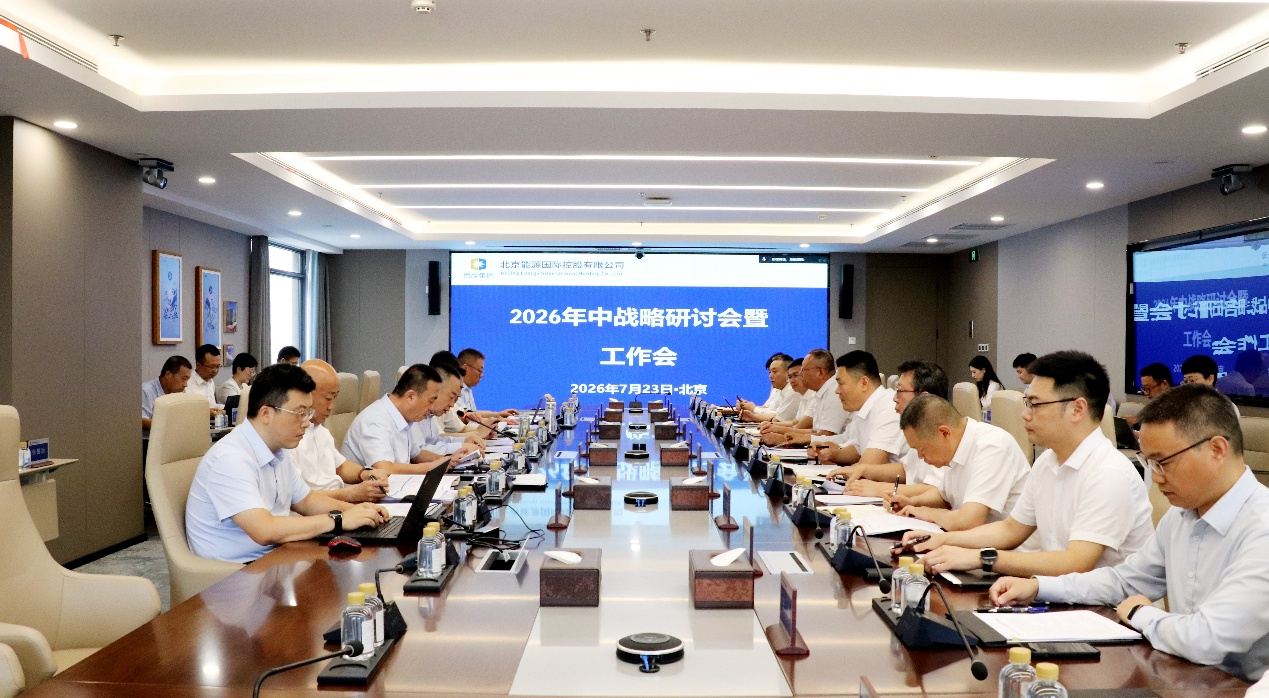
The conference comprehensively reviewed the company’s achievements and progress during the first half of 2026, conducted an in-depth assessment of the changes and challenges in the external environment, carefully analyzed the company’s existing problems and shortcomings, and made systematic arrangements for key priorities in the second half of the year and the period ahead. Focusing on the company’s practical need to overcome difficulties and achieve breakthroughs, participants contributed practical insights and actionable proposals based on their respective responsibilities, centering on value creation. They effectively turned consensus into a drive for action and translated active discussions into strong determination to overcome challenges.
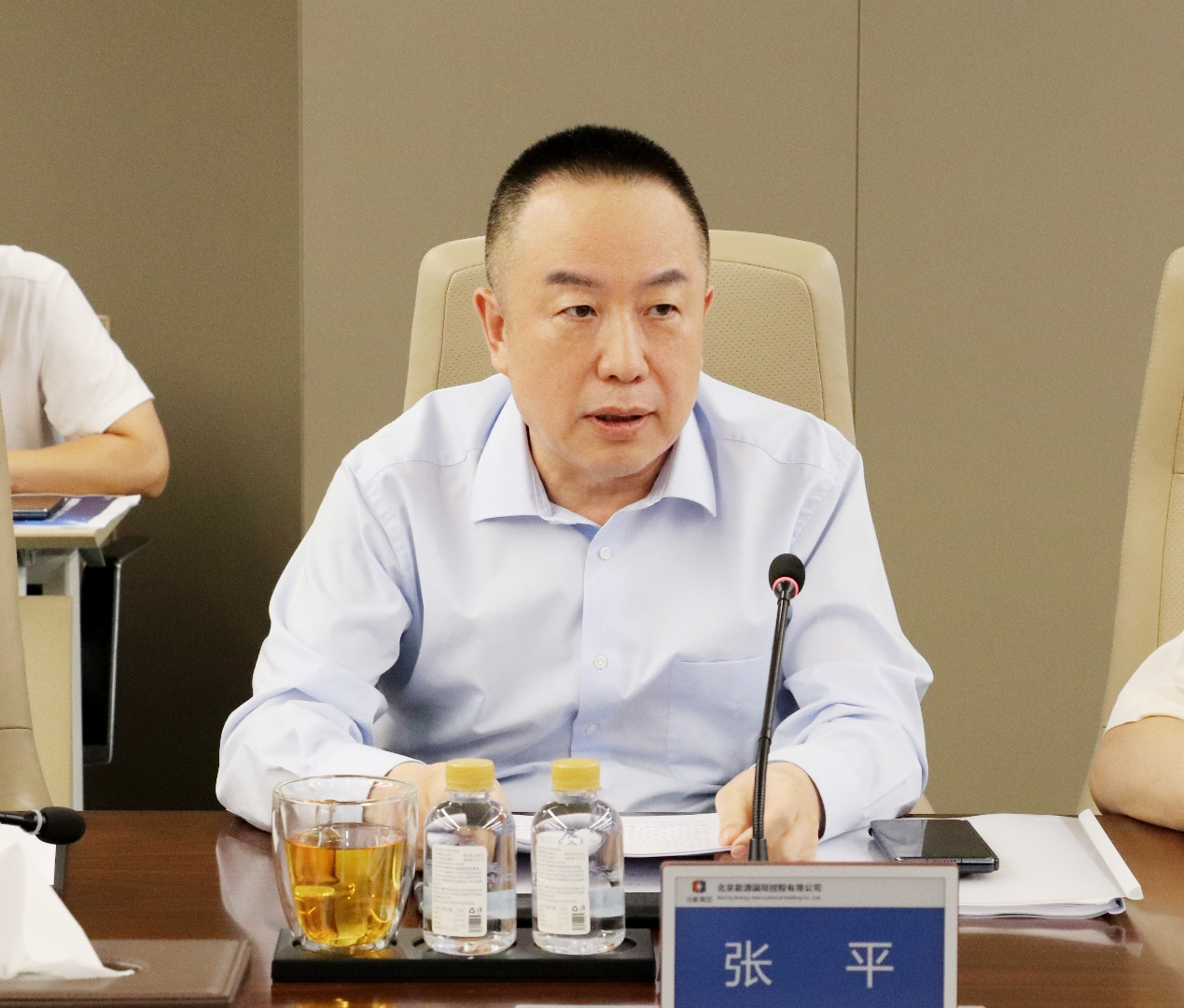
Zhang Ping, Executive Director and President of Beijing Energy International, delivered a keynote address titled “Strengthening Strategic Confidence, Deepening Value Creation, and Striving to Achieve Annual Business Targets”.
He noted that, affected by factors including the declines in both volume and price across the power industry in the first half of the year, the company faced operational pressure and narrowing profits, and saw earnings fluctuate across certain business segments. Faced with these gaps, the company must deeply reflect on the shortcomings in lean management, cost control, and the advancement of its combined asset-light and asset-heavy approach, resolutely abandon any passive “lie-flat” attitude, take proactive action, and remain firmly committed to value creation. Zhang Ping pointed out that the industry has entered a period of in-depth adjustment characterized by intense cultivation, competition of internal strengths, and the survival of the fittest. However, opportunities are embedded in the crisis. China’s coordinated efforts to advance the new energy system, power grid upgrades and other major deployments, the vast energy investment potential during the 15th Five-Year Plan period, the continuous expansion of green power consumption channels, and Beijing’s clear demand for externally supplied green electricity all provide strong support for future development.
In responding to cyclical fluctuations, we must face challenges with confidence and maintain strategic resolve. The entire company should take lean operations, a combined asset-light and asset-heavy approach, and digital empowerment as key levers to sharpen capabilities in asset optimization, power market operations, risk hedging and management, and full-value-chain cost efficiency, going all out to secure success in the company’s second-half business objectives.
Focusing on the implementation of key priorities for the second half of the year, Zhang Ping outlined five key requirements:
First, deepen lean operations, focus on value creation, and make every effort to close the performance gap. All work must revolve around delivering profitability, and every effort must be made to close the performance gap. The company will accelerate the development of major energy base projects, including “Inner Mongolia-to-Beijing Power Transmission Base Project”, “Liaoning-to-Beijing Power Transmission Base Project” and “Southeastern Xizang Power Project”. For new investment projects, it will adopt a selective, market-oriented approach, actively explore asset-light operating models, and maximize resource value. Greater efforts will be made to unlock the operational potential of existing assets by increasing power generation, driving innovation and delivering tangible results in electricity market operations, deepening cost control across the entire value chain, enhancing full-lifecycle operational management, and addressing key weaknesses with targeted measures.
Second, remain committed to the transformation toward a combined asset-light and asset-heavy approach by revitalizing existing assets while optimizing new investments to pursue differentiated development. Conduct a comprehensive health check of existing assets and adopt differentiated, asset-specific strategies: accelerate the off-balance-sheet disposal of underperforming assets, and skillfully leverage capital operations to unlock value from high-quality assets. Proactively engage with industry leaders and promote integrated “existing + new asset” packages, capturing premium gains to open up new profit streams and building a replicable asset-light operating model that fundamentally moves beyond a single-revenue-stream reliance on power generation. Capture computing power economy opportunities through “green power + computing power” synergies, turning idle green electricity into digital gains and new growth drivers.
Third, uphold the bottom line of safety, empower operations through digital intelligence, and leverage technology to enhance safe production. The company will firmly establish a safety-first mindset and ensure that safety responsibilities are fully assigned and implemented at every level. It will further advance lean production management by adopting a tailored, station-specific approach to upgrade aging equipment, strengthen AI-enabled applications through AI-powered intelligent monitoring of high-risk operations and real-time early warning systems for critical equipment, and promote the deep integration of digital technologies with production safety.
Fourth, strengthen compliance and risk management, proactively resolve long-standing issues, and reinforce the foundation for steady development. The company will accelerate the closed-loop rectification of issues identified through various inspections, with particular focus on resolving long-standing issues such as deficiencies in project approval procedures and transaction structures. It will intensify efforts to recover outstanding good-faith deposits and facilitate the timely disbursement of national renewable energy subsidies. At the same time, it will establish a long-term mechanism for substantive compliance, shifting the focus from “procedural compliance” to “substantive compliance”, while standardizing corporate governance and addressing weaknesses in executive appointment compliance.
Fifth, deepen management enhancement, optimize organizational structure and performance evaluation, and build stronger synergy across the workforce. The company will streamline its organizational structure by eliminating redundant positions, improve evaluation and incentive mechanisms through the full rollout of the OKR-KPI dual performance evaluation system, strengthen talent and team development, encourage employees to align their personal growth with the company’s development, and continue embedding the “Fusion” corporate culture, recognizing outstanding frontline role models and fostering a united workforce committed to overcoming challenges together.
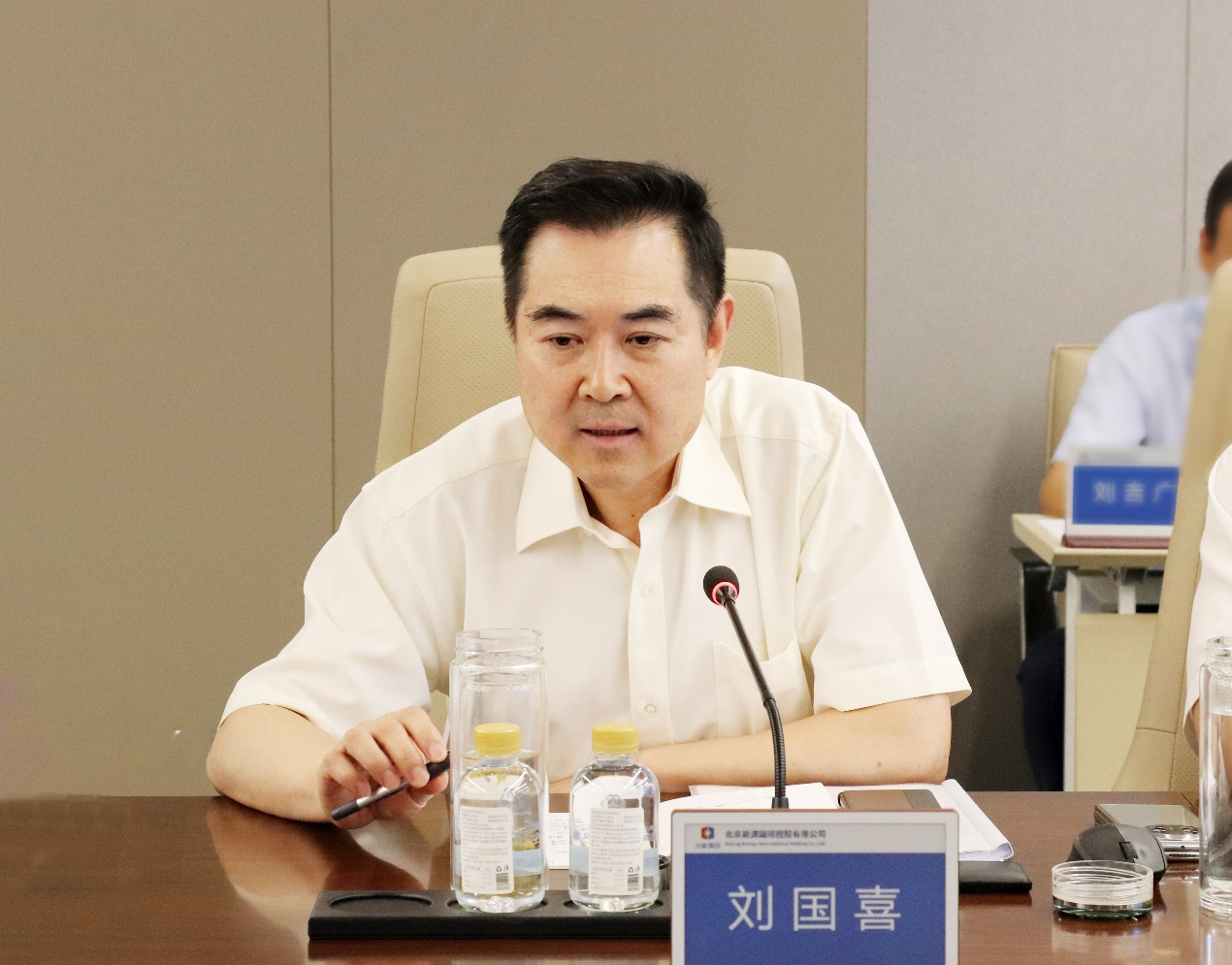
Liu Guoxi, Secretary of the Party Committee and Chairman of the Labor Union of Beijing Energy International, emphasized the following in his remarks:
First, transform pressure into motivation and build stronger development synergy. In the face of declines in both volume and price, shrinking profits, and policy adjustments, the company must fully understand the principle that “the wise adapt to the trend and harness it”. It must resolutely reject any passive “lie-flat” mentality. As the company’s “key minority”, the management at all levels should lead by example, transform pressure into a driving force, unite and inspire our workforce to pursue excellence, perform their duties with dedication, and contribute their best ideas and insights, pooling collective wisdom to support the company’s development.
Second, maintain strategic resolve and strengthen confidence in development. Difficulties arising from changes in the external environment and policy adjustments are temporary, and the company must be adept at spotting opportunities within these shifts. As a market-oriented enterprise tasked with generating profits and serving the capital city, the company must remain firmly committed to its development strategy. Each branch company and subsidiary should adopt measures suited to local conditions, ensure the successful implementation of high-quality projects, maintain their market position, and never miss development opportunities due to short-term changes.
Third, uphold the bottom lines and red lines, and strengthen the guiding role of Party building. Leaders at all levels must strengthen safeguards against integrity risks and enhance integrity education to ensure that all employees remain on the right track. Party building should be deeply integrated with business operations, transforming Party-building strengths into development advantages. With business operations as the central focus, the company should coordinate and advance all aspects of its work in a balanced manner to ensure the fulfillment of its annual targets.
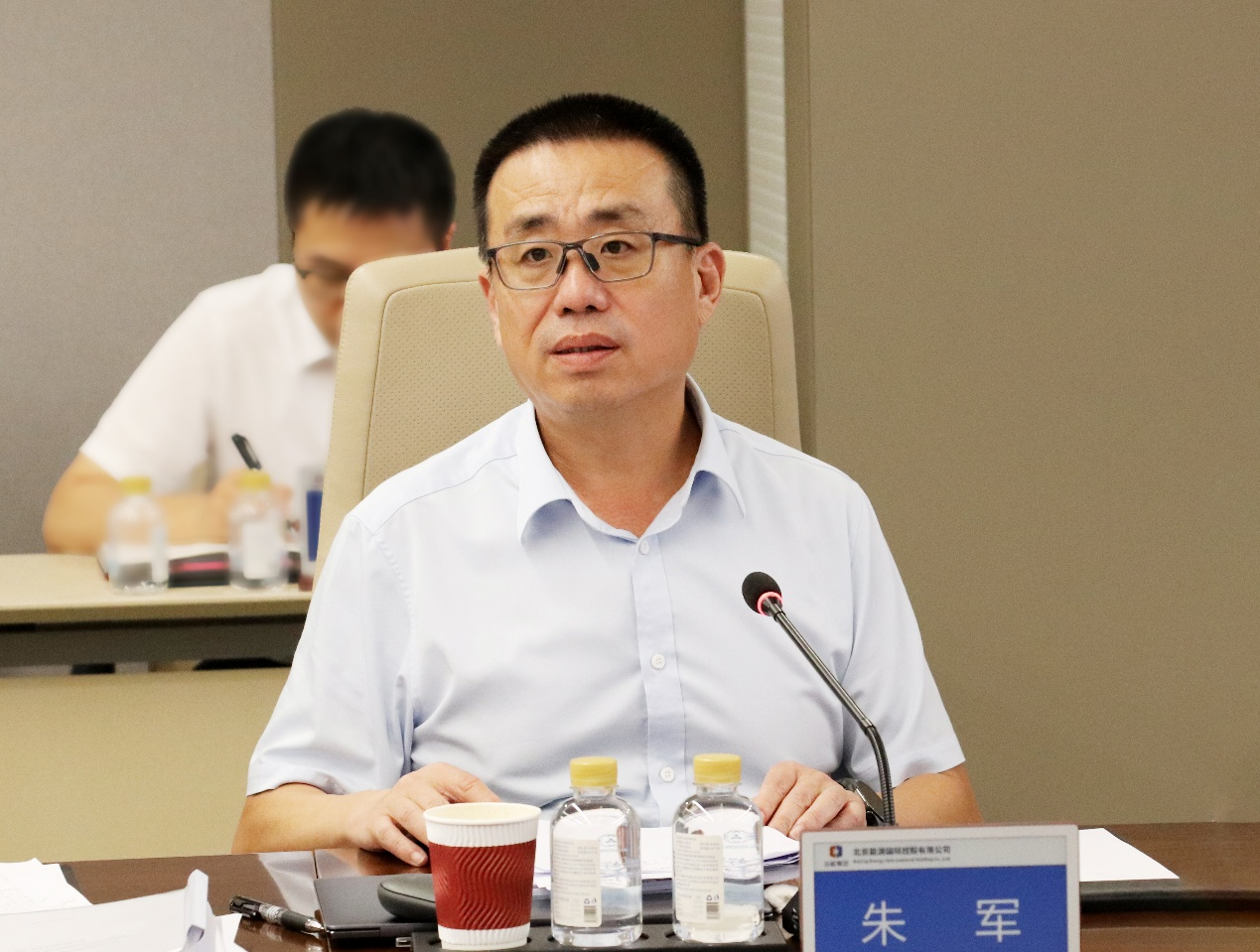
Zhu Jun, Executive President of the company, drew on its performance in the first half of the year and emphasized the following five requirements:
First, strictly uphold the bottom line of safety and reinforce the foundation for development. Safety must always remain the company’s top priority, with particular attention given to flood-related disasters, extreme weather, and geological risks, especially for projects located in complex terrain. The heads of all branch companies and subsidiaries must fully perform their responsibilities as the primary persons accountable for production safety by improving emergency response plans, strengthening inspections and hazard identification, eliminating complacency, and ensuring that safety responsibilities and measures reach every frontline team and are implemented at every post.
Second, strengthen operational management and make every effort to reverse losses and improve profitability. The company will focus on loss-making enterprises, with loss reduction as the core objective and targeted improvement plans in place. For projects facing operational difficulties, resources should be concentrated, electricity marketing efforts intensified, and principal leaders should take personal ownership and oversee execution on the ground. For existing projects affected by external market conditions, we should actively explore regional coordination pathways, improve management and operational efficiency, effectively control costs, and eliminate unnecessary expenditures.
Third, accelerate asset turnover and safeguard business performance. The company will continue advancing project transfers and off-balance-sheet disposals of assets, revitalize existing assets, and accelerate cash recovery. Branch companies and subsidiaries should review their project portfolios against annual business targets, establish clear transfer schedules, and expedite preliminary procedures and approvals. For projects progressing slowly, responsible executives must personally oversee implementation, remove bottlenecks, and ensure annual performance targets are achieved as scheduled.
Fourth, strengthen project settlement management and ensure closed-loop project delivery. The heads of branch companies and subsidiaries should personally oversee project settlement work, eliminate any delays or buck-passing, and focus on resolving bottlenecks in the settlement process. They should coordinate the completion acceptance and settlement audit of completed projects, ensure the accuracy and integrity of engineering quantity verification, change orders, and cost confirmation, establish full-process closed-loop project management, and ensure projects can stand up to post-project evaluation.
Fifth, strengthen audit rectification and improve compliance management. Branch companies and subsidiaries should formulate targeted corrective measures for management deficiencies and capability gaps identified through audits and complete rectification within prescribed timeframes. They should attach great importance to Beijing Energy Holding’s special inspections by conducting self-inspections in advance and proactively correcting identified issues. The company will continue to advance the categorized resolution of long-standing issues, combining short-term close-out with long-term resolution, improve internal control mechanisms, and embed a strong culture of compliance across the organization.
Zhu Jun stressed that, following the conference, all participants should deeply grasp the essence of the meeting, strengthen their sense of responsibility, and focus on effective execution. They should transform pressure into motivation and initiatives into tangible results, going all out with unwavering determination to achieve the company’s annual targets, thereby contributing to its ability to navigate industry cycles and achieve high-quality development.
The conference was also attended by the company’s director-level management personnel, department heads, and the heads of its branch companies and subsidiaries.