On August 7, Beijing Energy International’s integrated energy project for the new campus of Beijing University of Technology (BJUT) in Fangshan District was formally granted approval by the Fangshan District Development and Reform Commission of Beijing Municipality. This project represents the company’s first large-scale integrated smart energy project for a new university campus. The successful approval not only marks a milestone achievement in the preliminary phase, but also provides invaluable experience for the company in deepening its energy service cooperation with universities in the capital and expanding multi-energy complementary application scenarios, thus paving the way for the company to build a model integrated green energy campus.
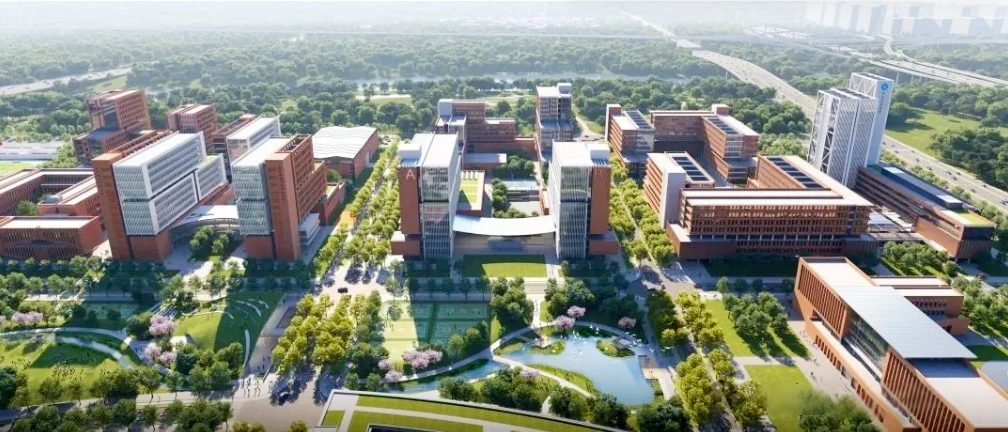
The project is situated in the eastern extension of Liangxiang University Town, encompassing a total floor area of 830,000 square meters. It deploys a clean, multi-energy coupled supply model that combines ground-source heat pumps, municipal heating for peak shaving, distributed photovoltaic power, waste heat recovery, and solar/air-source energy systems. An integrated energy management platform will also be established, enabling the efficient provision of heating, cooling, domestic hot water, and electricity for the first phase of the new campus, while significantly enhancing energy efficiency and smart management capabilities across the campus. Boasting a full spectrum of energy types and a high degree of technology integration, the project is expected to reduce carbon dioxide emissions by 10,517 tons annually once in operation. It will substantially lower the campus’s reliance on conventional energy sources and cut carbon emissions, yielding significant environmental benefits.
The project’s implementation will further optimize the regional energy consumption structure and provide a replicable and scalable paradigm for the green and low-carbon transformation of newly built university campuses in the capital. It will contribute directly to Beijing’s “dual carbon” goals of carbon peak and carbon neutrality and propel the sustained, high-quality development of the company’s integrated smart energy business in the capital.